The Art & Magic of Tarot Divination
By Michelle Lewis
The Blessings Butterfly
About This Session:
Exploring the Tarot as a Tool for Intuition, Reflection, and Spiritual Growth. Learn the difference between Tarot and Oracle decks. Get practical, easy-to-follow tips for connecting with your deck and giving beautiful, intuitive readings for yourself and your clients... even if you're a new reader!
hello, hello, and welcome to the art and magic of Tarot Divination.
I'm Michelle Lewis, the Blessings Butterfly, and I'm so excited to share today's session with you.
We're going to be looking at the tarot and exploring it as a tool for intuition, reflection, and spiritual
growth.
And I just want to throw in a little bit today about the difference between tarot and oracle.
So just a brief introduction for those of you who don't know me yet.
My name is Michele Lewis.
I am the Blessings Butterfly, and I founded this practice, the Blessings butterfly, in 2015.
And in these past 10 years, it has been such a wonderful journey, a powerful journey, a sometimes
an often challenging journey, but ultimately an amazing journey back to the reclamation of the
term witch, which I am a professional modern witch.
And I love it. I love it.
I love being able to use my gifts, my psychic abilities, all of the things that I've learned and studied
over the years, even since I was a little kid, being able to connect with animals and communicate in
that way, connecting with the spirit realm and really using those skills, as well as how I've learned
how to read Tarot, how I have learned to embrace my creativity and even become a deck creator
myself.
I use these things in my practice every single day.
And it's so much fun and such a rewarding way to connect with my clients, connect with my own
lineage and my own heritage, and work with my own spirit team.
Now, I do come from a very long line of women who are psychic, rest their soul, bless them, and I
see them every day in spirit, both from my mother's side and my father's side.
These are people who have been spiritual practitioners, both from different directions, different
paths, and different practices.
But it has been a really beautiful way to reconnect with them and my own lineage.
So let's talk about some of the misconceptions of Tarot.
Tarot is not actually fortune telling, and I know that there are practitioners that use this for that
purpose, and you certainly can.
But it's really more of a tool for reflection and for personal empowerment.
And I really love the way that, you know, you can connect personally with a Tarot deck, really any
deck for divination.
It really invites us into a space of dialogue, storytelling, and communication.
And that is not just with our clients, but it's with our own intuition, our spirit team, our guides, our
higher self.
And my goal for today is to help you see Tarot as an art form and not just as a tool for prediction.
You may or may not know that Tarot actually has a very rich history as an art form, certainly.
And it began back in 15th century Europe.
Tarot began as a set of playing cards for the very elite.
It was a way to pass the time when one is, you know, sitting about in one's estate, castle or
chateau.
It was in the 18th and 19th centuries that tarot itself transformed into more of a mystical and
divinatory practice that we are more familiar with today.
And even now we see Tarot as this amazing collection of artworks.
And even though the decks have changed considerably from those early, early decks, there is a
beautiful sort of synergy.
Synergy that sounds right.
A beautiful synergy with the Tarot decks and the way that they are structured.
Even with all the different sort of artists that have created decks from hand drawn and digital
collage, even AI artwork for whatever you may think about that, not trying to stir the pot there, I
just believe that it's such a beautiful way to use our creative expression through a Tarot deck.
And really, that is an interesting way to really connect with a deck because there's so many
different versions out there based on the different artworks that we see.
So talking a little bit about the structure of a Tarot deck, it is indeed a very structured practice.
So there are 78 cards in the tarot deck.
It consists of 22 major arcana as well as 56 minor arcana.
We'll get into that a little bit more as we go along here.
But for the major arcana, these are going to be the archetypal cards.
These are all about those big life lessons, that sort of big time spiritual energy.
These are the cards labeled either 000, sometimes 1, depending on how the author has created
their deck.
But that major arcana starts with the fool and ends with the world.
And it's all the cards between that we sometimes call that the Fool's journey.
So starting with that fool card, and I love the Fool.
I love this card so much.
This is all about the journey of starting creat creativity, starting from a space of curiosity and all the
way through completion, which is the world card.
Then we get to the minor arcana.
The remaining 56 cards of the deck, this is broken up into four separate suits.
Cups, wands, swords and pentacles or coins.
And again, you can find slightly different names to these suits based on what the artist has felt
drawn to create in their artwork.
Now, within those four suits, we'll find the court cards, which are the pages, the knights, the
queens and the kings.
And this can also vary by artist.
There are so many decks that are more inclusive at this time and space, which is wonderful to see
things that aren't solely gender based.
So there can be a lot more inclusion there, but it's just a really interesting way to see the world.
And this is how we use these cards to create a reading for ourselves or for our clients.
All right, so to get things started, let's talk a little bit about the Major Arcana.
And for reference, I'm going to be using cards from my trusty Rider Waite deck, which actually
should be called the Rider Waite Smith deck, because the artist, Pamela Coleman Smith Pixie, did
not get enough credit in her time.
So I want to honor her.
Now. The Rider Waite Smith Tarot deck is a great deck for whenever you're beginning your tarot
journey. And you can use it.
If you never use another deck.
This is a great one, but there's many to choose from anyway.
So the Major Arcana are the first 22 cards of the Tarot deck.
And these are representative of the archetypes.
It's archetypal energy.
So overarching life themes, major life moments, big spiritual stuff that goes on.
And whether it's labeled as 0, 0, 0 or number one, depending on how the artist has created their
deck, the first card of the deck is always going to be the Fool.
See if I can get that in the camera there. The Fool.
And this whole thing with the Major Arcana represents what we call the Fool's journey.
It's from that space of innocence, that place of curiosity, all the way through to the world card,
which represents completion.
Let me pull out the world card here to show you.
So this is the world.
So when you are getting to know the Major arcana and your deck by design, you're going to start in
that space of the fool and work through each of these 22 cards, getting to know each one of them
and the energy behind them, working with how the artist has presented them so that you can then
in turn connect with the energy of that deck.
Now, there are no bad cards in Tarot.
I'm just going to say it.
There are no bad cards in Tarot.
All it is is energy and information.
So let's say you're doing a reading or you're pulling a daily card for yourself and you come across a
card that makes you feel some kind of way.
Maybe you come across a card that feels confusing or frightening.
For example, the Hanged Man.
The Hanged Man.
Now, on the surface you might say, oh, the Hanged Man.
This is a Bad feeling, right?
But if you look at the artwork specifically with this deck, it can vary from deck to deck.
But this is someone who's hanging by their feet, and they're just sort of seeing things from the
world in a different way.
They are not attached.
They're hanging by their feet like tiptoes.
So what the hanged man typically represents is being in a space of pause, having to pump the
brakes for something, having to wait, or, you know, not being allowed to move forward, being in
that space of having to take a breath or take a beat and see things from a slightly different
perspective.
Now, certainly nobody likes to wait, and it's not fun when you are having your progress halted for
whatever reason, like traffic or something that is that you're waiting for that hasn't come through
yet.
This can test our patience, right?
And oftentimes, that's what that card is asking us to do, is be patient, pause, take a breath, and
see things from a different perspective.
Now, another card in the major arcana that gives people a little freak out from time to time is the
death card.
The death card.
And while this doesn't necessarily mean a physical or imminent demise, what it often means is the
ending of something, right?
It represents an ending, a finality.
And this can often be something quite positive.
If you think about it, perhaps you or your client has been struggling in a situation for far too long,
and then the death card comes forward, and it can be a little push or a little nudge to say, hey,
guess what?
That situation that we've been struggling with for so long, it's finally coming to an end.
We can finally bury this and put it behind us and move forward.
Now let's move on to another one that tends to freak people out, and then we'll move on from
there.
So the tower card.
The tower now with the tarot, with the tower represents in the tarot is change.
Change, which something we humans tend to struggle with.
And it can often be a dramatic change.
It can be a sudden change, and that can, you know, cause people to get into a little space of panic
or anxiety.
But should you pull the tower card in a reading, don't freak out.
It's just information and letting yourself or your client know that, hey, this is just representing
change.
It could be the need for a big change to take place.
And somet sometimes it's not something that we have a choice in, so we need to adapt to.
But there's also very positive cards that come along as well.
For example, the star.
Sorry about the camera. Y' all the star card represents our greatest hopes and dreams.
I like to think of it as that north star, that guiding light.
So when the star comes forward, it's an invitation to reconnect with your deeper dreams.
And as you continue to move through the major arcana, you work your way through to card 22, the
22 card.
And that's the world, and that represents completion or the finishing of a cycle.
And while endings are not always fun, we can't honor a fresh start until we honor the ending that
came before it.
So that's a little bit about the major arcana.
Okay, so moving on from the major arcana, we come to the minor arcana.
These are the remaining cards in the tarot deck.
And these 56 cards are divided up into four cups, wands, swords, and pentacles.
They may have slightly different names based on what the artist has designed, but they all
represent a specific energy or.
Or element to them.
For example, cups.
Cups.
So cups is actually ruled by the element of water.
And water represents our emotions, our feelings.
It's going to speak about love and relationships, deeper desires, things like that.
So when you're doing a reading and there's a lot of cups present, you can have an opportunity to
help tap into some emotions that maybe have been repressed or held back in some kind of way.
Because you know how often we are made to keep our emotions to ourselves and not feel like
we're safe to share them.
But that's the beauty of creating the sacred space, the magic of a tarot reading.
That space of divination is sacred, and you've given a safe space for yourself or your client to
express emotions in a safe way and have that held in a beautiful way.
Now, the next suit that comes forward is wands.
The suit of wands.
It might be called rods or sticks, depending on your artist, but wands is ruled by the element of fire.
And fire is about passion.
It's action, it's creativity, it's inspiration, it's movement and motion.
So when you get a lot of wands cards that fire energy showing up in a reading that is about
information that's moving quickly, situations that are happening rapidly, and that can really be a
beautiful way of sparking change.
Next is the swords.
Swords. Here we go.
Now, swords is ruled by the element of air.
And air is all about the intellect, right?
It's the things that go on in the mind.
It's learning, it's knowledge, sometimes unlearning.
Maybe there's conflict in the mind, but it also speaking to the Truth, sort of cutting through the
cracks, if you will.
So when you come to swords in a reading, you're going to be working with mindset, ideas, learning
and knowledge.
And then finally, the final suit is the suit of pentacles.
And pentacles is ruled by the element of earth.
And this is going to be speaking about things that are very physical, very tangible.
This is work, it's money, it's the physical realm, it's abundance, it's quite literally planting and
fertility, things like that.
So when you come to pentacles in your readings or in your card draw, your daily draw, this is going
to be speaking to much more physical, tactile things.
And it can be foundational energy.
So that's a little bit about the minor arcana and how that works in your reading.
So it doesn't have to be so stale.
It can be really, really interesting to see how these play out in a story.
Okay, so that was really detailed.
But I want to go ahead and let's lighten things up just a little bit as we move forward here.
Because this is not just about the art, but it is about the magic of reading tarot.
And where the magic kicks in is you connecting with your intuition.
It's you connecting with the symbolism of the deck that you're using, and very much so connecting
with the whole element of spirit.
While the cards itself are divided into the four different suits or elements, the element that you
bring as the reader is the element of spirit.
So you're connecting with spirit, whether that is your spirit guides, your sitter's spirit guides both of
them, your intuition, your highest self.
And I love to use a storytelling approach.
It is boring as heck to just sit and read the book.
You know, that's what you do when you're practicing and you're learning and you're getting
comfortable, right?
But when you're sitting for somebody, or somebody is reading for you, you really don't want them
to pull out the book and read word for word, somebody else's words.
You want them to connect with the energy that is present in that reading and between the two of
you.
So that's where your storytelling comes through.
You're connecting with your intuition.
You are connecting with the spirit that is around you and within.
And you're using the tarot as a conversation, not as a fixed answer.
And yes, while it is possible to make some predictions and some timing based predictions using
tarot, it's really important to note that that is just one of an infinite number of outcomes.
It's a snapshot in time, you have the ability to make different choices based on the information that
you're receiving. Right.
And you're using cards to help you connect with answers that honestly, you already know.
But sometimes we just need a little tool to help us navigate and see and connect with those.
So don't be so stuck on a specific labeled meaning.
Read more into the energy that that card is presenting.
Now, there are a variety of different very common tarot spreads that you can use for yourself or
your clients.
You can start with something as simple as a one card pull.
And you can pull a card every day or one card for the week and use that as a place to reflect, to
use it as a journaling prompt or just kind of gain some insight on kind of the energy that you want
to lean into and focus on.
You might try a simple three card spread.
You can do past, present and future, mind, body, spirit, anything like that.
And then of course, there's more sort of complex readings, larger spreads like the Celtic Cross or
similar spreads.
And you're going to use these for a deeper exploration and, you know, more of a longer
storytelling.
Now, I do have a confession to make.
It's controversial.
I don't like using the Celtic Cross.
It is not a spread that I personally connect with. Can I use it? Yes. Do I use it? Almost never.
I really like to be a lot more intuitive and I have more fun playing with different spreads that aren't
so structured as that.
And I really allow the energy to speak for itself.
You try it.
Okay, just a few things to wrap things up here because I know we're getting close to time.
Just a reminder on the ethics of using tarot.
This is a tool for empowerment, right? It is guidance.
It is not fate.
You as the reader or as the sitter, you always have free will and you can make different choices.
It is important that you respect the free will and the boundaries of the person who is sitting for you
if you are reading professionally.
And I always encourage to use empowerment over fear readings should be uplifting and they
should offer possible solutions, not something that's concrete or carved in stone.
And then finally, always, always, always ground and close the session.
That is part of the importance of a boundary between you and your client and the spirit realm.
Once you've gone to ask for that guidance, say thank you and move on.
All right now as we close things out, because I know we're getting close to time here, I did want to
touch on something that I dropped a little nugget at the very beginning and that was about the
difference between Tarot and Oracle Tarot decks versus Oracle decks.
And this is like one of my most common questions.
When somebody comes to sit down for a reading, especially if they've never had a reading before,
what's the difference?
Well, they're both divination tools, right?
They're both decks of cards.
And with the Tarot, as we've discussed here today, it is a very specific structure.
There's typically the same number of cards in every Tarot deck.
They are broken into major and minor arcana and there are four suits in the minor arcana.
So that's going to be a really like a specific structure to learn and build your story from.
Now with an Oracle deck you can get any number of cards in the deck and it's going to be based
solely on what the artist or the creator has decided to put forward.
Now as an Oracle deck creator myself, let me just grab my deck here.
Oh, I just happen to have it here handy.
So I'm co creator of the Cosmic Transformation Oracle deck and it is a fantastic deck.
I'm going to make sure that there is a way for those of you who have watched this to get access to
a deck as while they are still available.
But the difference between a Tarot and an Oracle deck is just that an Oracle deck is going to be
more free flowing.
There's a lot more creativity that's involved there where a Tarot deck is going to be a little bit more
structured and there are more specific pieces and elements to each card within the deck.
Both of them are user friendly, both of them are okay.
For beginners and seasoned readers, it's just going to be a matter of the flavor that you choose.
Now as we wrap it up here, I just want to remind you that Tarot is an art, right? It's an art form.
It's really a mirror between you and the energy around you as well as the inner self, the spirit team
and your person sitting with you.
In order to connect with your deck, start a daily practice.
It doesn't have to be really, really intricate or super detailed.
You can start with just a single card a day and just sitting with that, journaling with it, seeing how
you connect with it, physically trusting your intuition with it, and reminding yourself and your
clients that Tarot, oracle, any divination tool is about art and magic.
It's connecting you with your own intuition.
It's bringing that beautiful element of spirit.
Because while the decks may be based around different elements, earth, air, fire and water, you
bring the element of spirit that is something that is magic in and of itself.
And remember Tarot guides, but you decide none of this is carved and set in stone.
You get to make your own choices.
So I hope this has been wonderful for you as it has been for me.
I really enjoyed sharing this with you and I look forward to connecting with you online.
You can reach me at the Blessings Butterfly on social media channels and there should be
information after this on how you can join my daily email or, excuse me, my private email list,
which I sent out a weekly positivity boost.
It includes where you can find me in person, ways to work with me, and I include a spell of week for
you to try.
So that is all from me.
I'm Michelle Lewis of Blessings Butterfly.
Thank you so much.
Next step, grab my freebie...
Full Moon Tarot Spread
Use my simple 6 Card Spread to help you connect with the Full Moon and the Tarot to illuminate your personal message. Beginner Friendly!
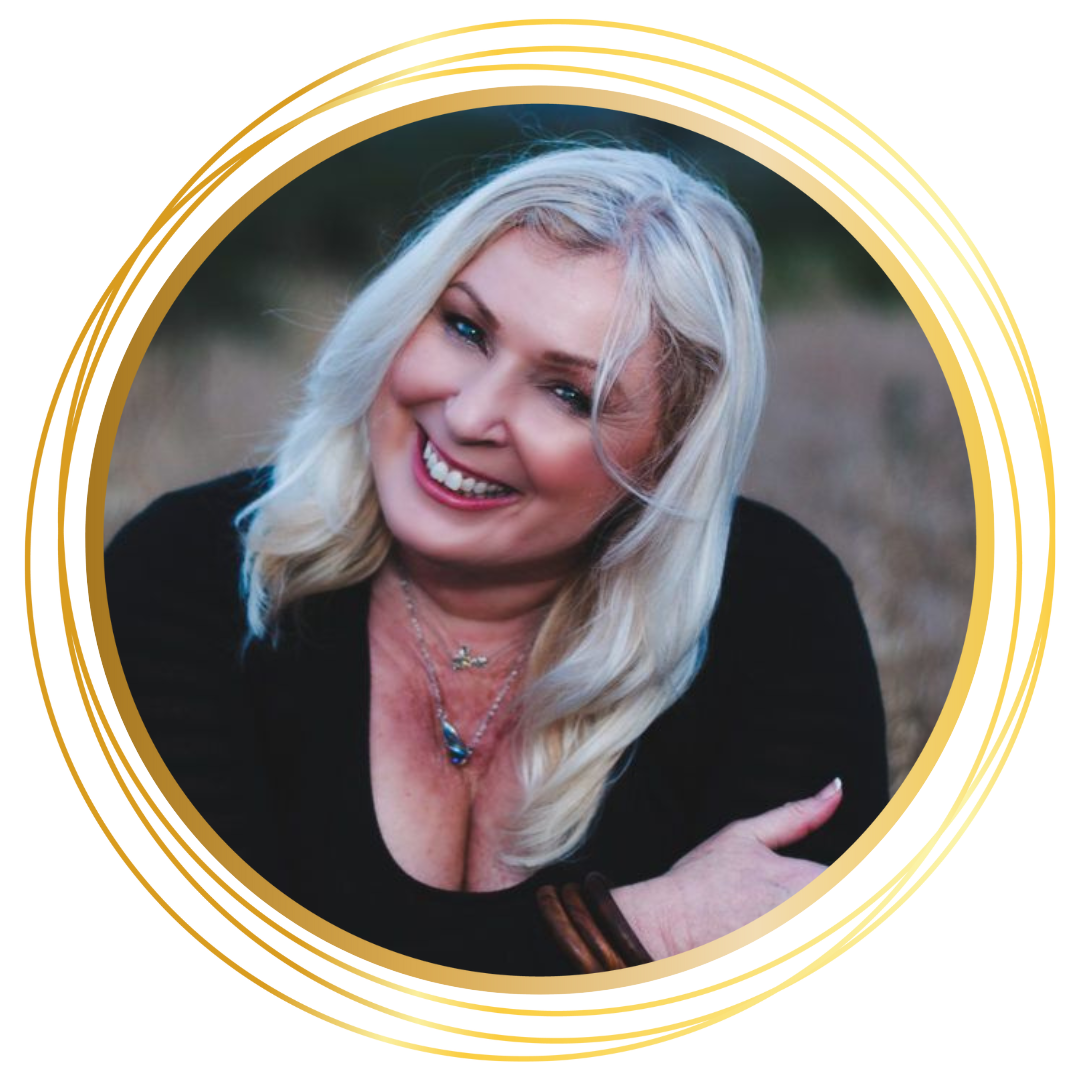
Michelle Lewis (she/her/they) is a Professional Modern Witch. She works as an energy healer, gifted tarot & oracle reader, crystal energy practitioner, animal communicator, award-winning writer, and best-selling author. Her first self-published book, The Blessings Butterfly, debuted in the Top 100 on several Amazon charts. She co-created Cosmic Transformation Oracle Deck & Guidebook and is a contributing author to the bestseller Soul Hearted Living and fan favorite The Witch Collective Zine.
Have you upgraded your ticket yet?
Get an All-Access Pass and give yourself over $2,050 worth of resources and support to turn inspiration into aligned action.
You’ll have the tools you need to keep your momentum going and create true change in your daily life.