Own Your Center: A 5-Minute Pranayama Protocol to Stop Spiraling and Think Clearly
By Dr. Dawn Browning
HolSol Wellness LLC
About This Session:
When stress hijacks your body and your mind will not stop spiraling, clarity can feel out of reach. In this session, Dawn Browning, Ph.D., research scientist and certified yoga therapist, reveals how the ancient map of the Five Elements, paired with the science of Pranayam, offers a direct path back to steadiness. You will hear her story of breaking a relentless stress cycle not with more willpower, but with conscious breathing, and discover how you can use the same principles to regain your center.
Dr. Dawn will guide you through a simple, science-backed Pranayama practice you can feel working in minutes. Her clients have said that her Pranayama experiences are: “like doing reiki on yourself” and “a definite reset.”
Through this session, you will learn:
- Why reconnecting with your breath is the fastest way to shift out of overwhelm
- How the Air element opens perspective when your mind feels scattered
- A reliable practice you can return to anytime
Nine years ago, I was ready to call 9 1 1.
What broke the stress cycle
wasn't more medication.
It was reconnecting to my breath.
Hi, I'm Dr. Dawn Browning, somatic
scientist and pranayama teacher
in the Gitananda yoga tradition.
I help high achieving women
downshift the mental drive to relax,
recenter, and reclaim your energy.
I do this bridging modern
science and ancient wisdom.
Have you ever felt desperate for relief?
Like your body is working against
you no matter what you do?
You're eating well, you're
exercising regularly.
You may even prioritize sleep,
but stress still takes over
and you cannot loosen its grip.
That was me at an ashram
outside of Austin, Texas.
Nine years ago.
I was at a yoga therapy teacher training.
And I live with type one diabetes, so
I require insulin to live, and I was
in a prolonged state of hyperglycemia.
So what that means is that my blood
sugar was three times the levels
that it should be for over 36 hours.
Despite doing everything that I knew
to do, like taking insulin, exercising,
drinking, copious amounts of water,
trying to relax, I could not sleep.
In that 36 hours, I was at my wits
end and ready to call for help.
That is when my teacher, Joseph LaPage,
approached me and asked me what I needed.
And I said, I just want to relax.
So what he did was led me through
a guided relaxation and conscious
breathing or Pranayama practice.
In the matter of a little more than
60 minutes, I was able to relax.
Stress released its grip on my body
and my hormones, which were the
problem, and my blood sugar dropped
precipitously to normal levels.
It stunned us both and that experience
really shifted my perspective
and was a pivot point for me.
It is when I decided to become
a certified yoga therapist.
And now has led me even further to
study Pranayama and teach it to others.
You may not have type one diabetes or a
chronic disease that could kill you, but
we do suffer from this overabundance
of stress hormones and being in
this activated stress cycle, and
we need ways to decouple from it.
Over the last 13 years of studying
yoga, I've learned a lot about the
five elements, and it is a framework
that comes from Samkhya philosophy,
which gave rise to yoga and Ayurveda.
The five elements are earth,
water, fire, air, and space.
And they are the building
blocks of all that is.
Through my advanced studies of
yoga, and particularly in the
Gitananda yoga tradition, I have
been devoted to the study and
practice and teaching of Prana Yama.
Pranayama is the fourth limb of Ashtanga
yoga, and particularly in the Gitananda
tradition, the scope of pranayama is.
Vast.
It really is the art of understanding
your energy and the breathing practices
that we covered in year two of that
training, I was introduced to Pranayama
practices associated with the five
elements, and it really opened up a
whole new way of being and seeing for me.
Today we're gonna focus on the
air element, which specifically
is focused on the lungs and this
part of the body, and it is.
Intimately connected with our mind.
And when the Air element is balanced,
we are creative, there is clarity.
It's associated with
movement and great ideas.
So that's what we're going
to be explor exploring today.
And when your Air element is out of
balance, you can be scattered in your
mind, you can have very difficult
time focusing on a given task.
You can walk across the room or the house
and forget why you were going there.
this is an example of excess air
element and we're gonna bring,
balance and cultivate that today.
Before we go further, I want to take
a moment to define Pranayama and
distinguish it from breath work.
Breath work is a word that is ubiquitous.
It is used in many, many places and it
refers to a lot of different things.
Breath work, it really is focused
on the breath and the physical
changes that your breath can make.
And while pranayama.
Does the same thing.
Pranayama also acts on your
emotional, your mental and your
physical bodies all at the same time.
And the other thing about breath work,
there's many different types, but some of
the most common ones are very activating.
They will stimulate your nervous
system and for the high achieving,
very driven women that I work with that
are carrying the weight of the world
on their shoulders, more stimulation
is the last thing that you need.
I really think that pranayama and
choosing the right practices and
attuning to what you need through the
five elements can really be a beautiful
path to achieving balance and calm.
Pranayama is often mistranslated as
breath control, but actually prana
is the life force or the energy that
animates life and ayama is to expand.
My teacher, Dr. Ananda Balayogi
Bhavanani, has defined pranayama as.
The act of enhancing
our awareness of prana.
So that is one of the big characteristics
that distinguishes pranayama from
breath work, is that it begins
with awareness, and we're gonna
build and cultivate that today.
We don't lose prana, we
don't lose the energy.
We don't need more prana.
We need to restore our connection to
it, and we do this through awareness.
There are three principles that I
want you to remember, and I'm sharing
this now before we do the practice.
Not that you'll be thinking
about them, but that they land.
And once we embody it, once you have
an experience, then my hope is that
they will be in your memory, and
you're able to embody them more fully.
Number one is where the
mind goes, prana flows.
This is a concept that
comes from the Upanishads.
Where we bring our mind, the
energy flows, and that's why we're
gonna be using our hands with our
breathing practices in a few minutes.
Number two, structure creates steadiness.
So an important part of yoga
that we don't really talk about
is this concept of Abhyasa.
It is regularity, rhythm, and
repetition, and with regularity,
rhythm, and repetition, the
practices become part of our tissues.
They become part of us, and it is easier
to remain buoyant in our stressful lives.
Number three, your body tells the truth.
Your breath will reveal what words do not.
This is why when I'm working one-on-one
with clients, the very first thing that
we do together is quiet breathing, where
I, as the therapist observe my client.
And I can see how they're breathing, how
they're holding themselves, and that tells
me far more than what their words say.
The breath tells the story
that the words cannot capture.
Now let's practice together.
We're gonna be doing Adham pranayama,
which is low lung breathing, and this
is breathing into your diaphragm.
So diaphragmatic breathing is another
way that you can refer to this practice.
We're gonna be using Sukha rhythm, an
equal count of the breath in and out.
Sukha rhythm particularly is associated
with the water element because it's like
the tide or the waves moving in and out.
It's very rhythmic.
It's very soothing.
Okay, we're using Sukha rhythm in
Adham Pranayama, and we're using our
breath, which brings in the Air element.
We're gonna do this
together, sitting down.
The most important thing
is that your spine is long.
as we begin with Adam Pranayama, we're
going to use our hands to help our mind.
Go to the low lungs, which is where
we want to focus our attention.
First, feel for your ribs.
Feel the lowest part of your ribs.
This is approximately where
the diaphragm is in your body.
Place your hands all
five fingers together.
Right on the lowest part of your ribs.
We're gonna take three breaths here, and
as we move through this breath practice.
I'm gonna count the first time.
We're gonna breathe in and out for a
count of six, and then after that I won't
count, but I'll just say in and out.
Draw the shoulders down and back.
Relax the jaw, and shake the
head to help you loosen up.
And we'll breathe out To start.
Breathe in 2, 3, 4, 5, 6 out.
2, 3, 4, 5, 6. In,
out,
in,
out.
Release the hands and just shake them.
Another important aspect of Pranayama
in the Gitananda tradition is that we
breathe into different parts of the lungs.
We're using our hands to help focus our
awareness on the parts of the lungs.
So that was the front of the low lungs.
We're now gonna do this for the
side of the mid lungs, so move your
hands to the side of the low ribs.
And as we're breathing, we're bringing
our awareness to where the hands are
touching and attuning to the movement of
the breath in and out, which will be an
expansion and contraction of that area.
Breathe out to start.
Breathe in two, three.
4, 5, 6 out, 2, 3, 4, 5, 6.
In,
out,
in,
out.
And then shake the hands.
You can just let them release the energy
that you're holding in your hands.
And then now we'll place all
five fingers, keep them together
on the back of the low lungs.
Just place the hands on the back of
the low lungs and we want to ideally
have the palms touching the back.
And you can place the back of
the hands if that's easier.
Breathe out to start
in 2, 3, 4, 5, 6 out, 2, 3, 4.
Five, six in,
out,
in,
out.
And then we release the
hands, shake 'em out.
Beautiful.
So that was breathing in to the
front side and back of the lungs.
So we'll now we'll do
three rounds of breathing.
But as we breathe in, we're gonna breathe
in the front, the side, and the back.
And as we breathe out, we're breathing out
from the back, the side, and the front.
So the reason we used our hands is
to build the awareness of this place
where we want to visualize the breath
moving when we do Adham Pranayama.
So the Hasta mudra that we're
going to do is chin mudra.
So we're gonna make this
shape with the hands.
We're going to create a circle with
the pointer finger and the thumb.
The other three fingers
are together and extended.
Okay, so a circle with the pointer
finger and the thumb and the other
three fingers are extended and together
we'll place this, where the palms are
touching the hips, so it's on your lap.
And we hold this hasa mudra, this hand
gesture to direct the energy into the
low lungs will breathe out to start.
Begin in 2, 3, 4, 5, 6 out, 2, 3, 4, 5, 6.
In in the front, the
side, the back out, back.
Side, front
in,
out,
in,
out.
In,
out,
in,
out.
You can relax your hands, relax
the breath, and just breathe
naturally and notice how you feel.
So how do you feel right now?
Do you feel grounded?
More present?
This is what connecting
to prana feels like.
It doesn't take hours.
It takes minutes.
When women explore these
practices, the shift is profound.
Ophelia, who did the 7-Day
Energy Reset, said "In just a few
days, I felt connected, aware,
and focused, A definite reset.
The whole process was enlightening,
calming, and supportive."
The Reset was born from my experience
of these elemental practices and
they're audio recordings that you
can do over the course of seven
days and the Sparsha mudras that
we went through and this process
there are asanas or postures, that
support the opening of the muscles around
the lungs and allow the expansion of
the ribcage that we go through in the
Foundations of Pranayama that I teach.
Because it isn't just
knowing the techniques.
It's weaving them into your life.
Nine years ago, one guided practice
broke the stress cycle that had
my body at the edge of crisis.
Since then, I've been helping
women find their own turning points
in as little as five minutes.
If this made a difference
for you, don't leave it here.
Take the next step.
Download my regulation ritual.
It's a four minute audio practice
that you can download to your phone.
It is like having me a PhD scientist,
yoga therapist, and pranayama teacher in
your pocket whenever you need to reset
and return to your calm, balanced center.
Thank you for practicing with me today.
I hope to see you again soon.
Next step, grab my freebie...
Regulation Ritual
This audio practice is your pocket-sized reset. In just four minutes, you’ll learn how to drop into your breath and regulate your energy on demand. It’s like having a Ph.D. yoga therapist and Pranayama teacher in your pocket—ready whenever you need to calm your mind, release tension, and reset your focus.
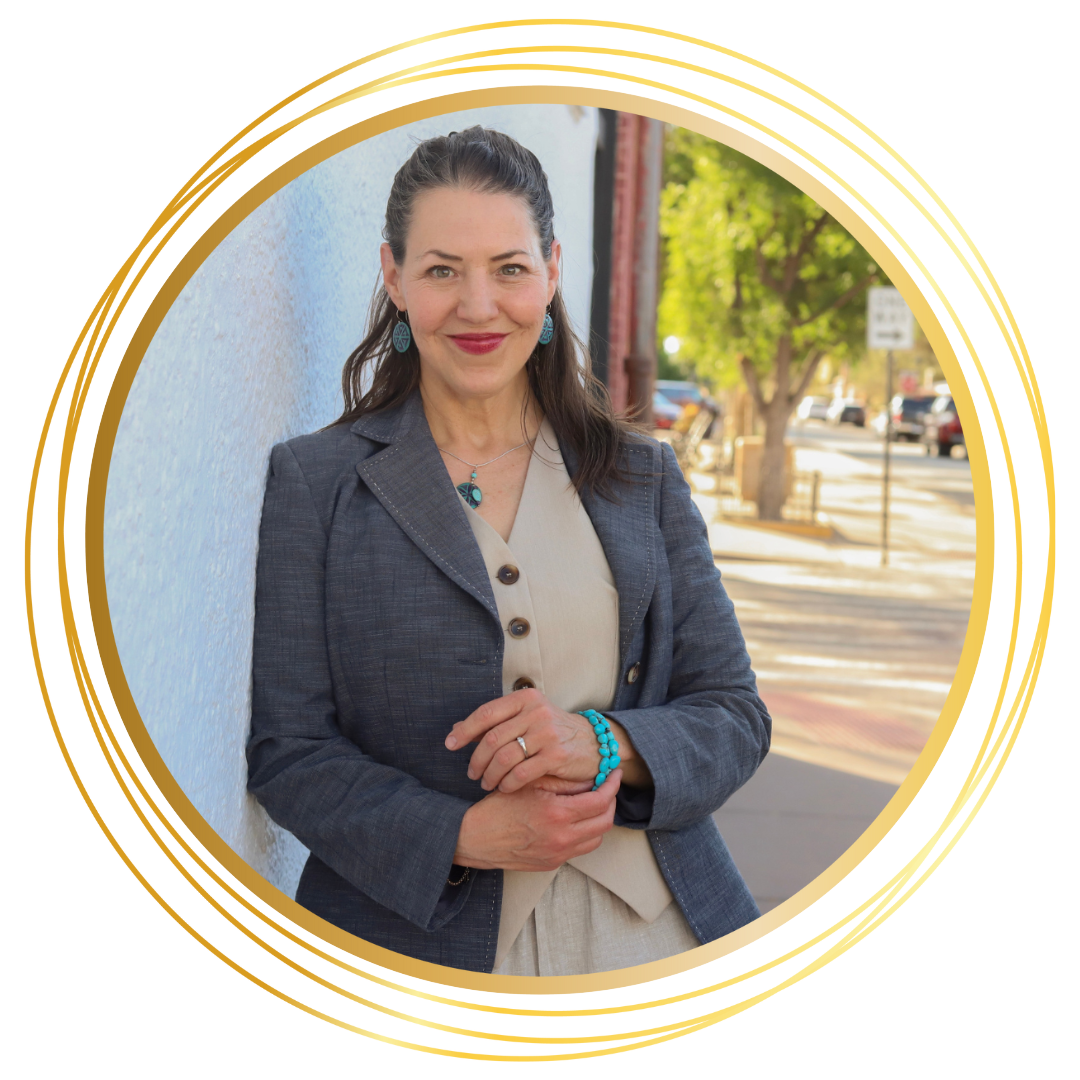
I'm Dr. Dawn Browning, a Ph.D. ecologist and certified yoga therapist and aromatherapist specializing in Pranayama (yogic breathing) and somatic stress recovery. In my business, HolSol Wellness, I help high-achieving women regulate their nervous systems, boost energy, and reconnect with their bodies—using
evidence-based practices rooted in traditional yoga and plant medicine.
I recently launched my YouTube channel and am stepping onto the stage to own my multidimensionality. Serving clients, tending to their needs, and deep listening have been incredible opportunities for growth so far in 2025.
I’m open to growing my network of collaborative, synergistic relationships with other entrepreneurs who embrace and stand with science in the health and wellness space.
Have you upgraded your ticket yet?
Get an All-Access Pass and give yourself over $2,050 worth of resources and support to turn inspiration into aligned action.
You’ll have the tools you need to keep your momentum going and create true change in your daily life.